

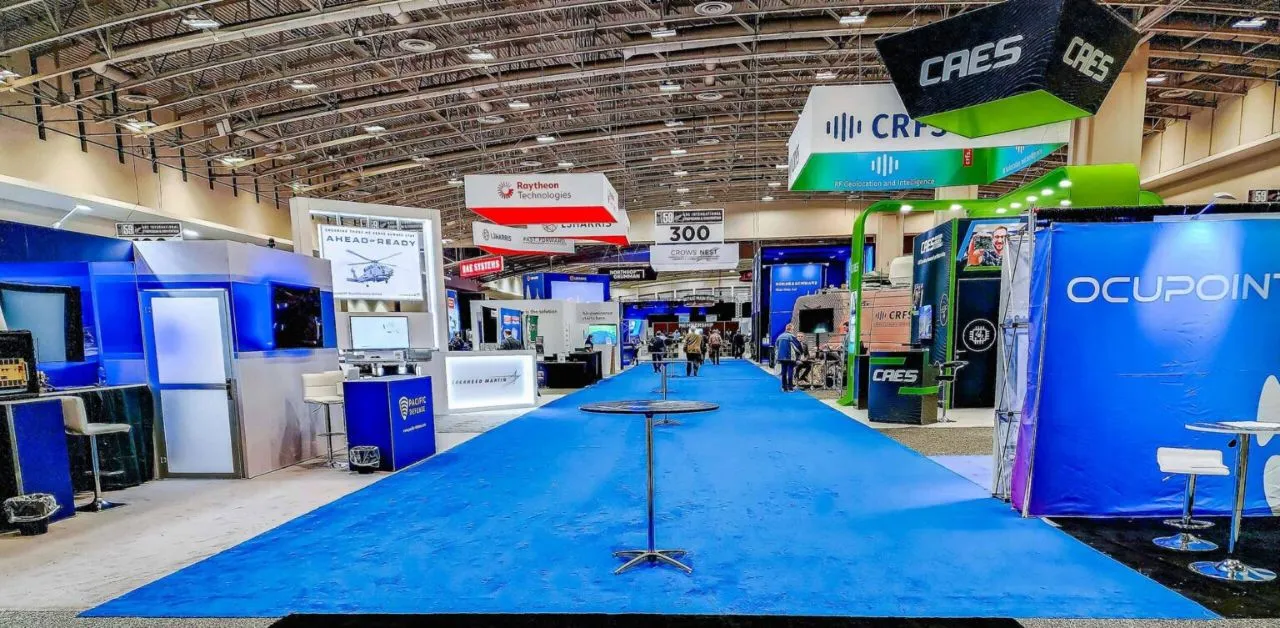
Quick Answer: Successful trade show exhibiting requires clear pre-event goals, an engaging booth design, trained staff who converse naturally rather than pitch aggressively, and structured follow-up within 24–48 hours of the event closing. Choosing the right trade show for your target audience matters as much as how well your booth performs on the floor. Exhibitors who plan all three phases- pre-show preparation, on-site engagement, and post-show follow-up- consistently outperform those who focus only on booth aesthetics.
Walking into a trade show can feel interesting but also stressful. Yes, how many booths, lights, and people are all competing to attract attention? This is a crowded world, and being equipped with the proper trade show tips for exhibitors can go a long way. Even the best product may be overlooked without proper planning; well-condensed exhibits will be able to attract visitors and establish business connections effortlessly.
Trade shows continue to be one of the most effective means of growing businesses in 2026. It is reported that this percentage of visitors to exhibitions keeps actual purchasing power, and these kinds of events are of greatest value. Having the right trade show marketing strategy, effective booth design, and a clear trade show marketing strategy. These factors make a difference and assist exhibitors in achieving trade show success rather than participating in the trade show hoping to get results.
This is why it is essential to learn trade show advice on how to be an exhibitor nowadays. Be it improved booth set-ups and visitor engagement strategies to proper lead generation planning, small things can make a big difference. Trade shows become an effective business growth tool rather than any other event when exhibitors work with preparation and use the appropriate direction.
Table of Contents
What Are the Most Important Trade Show Tips for Exhibitors?
Clear exhibition planning is always the most crucial trade show exhibitor tip, and understanding how to exhibit at a trade show starts with setting simple, measurable goals before the event. For anyone looking to become an exhibitor, it is advisable to set simple targets around lead generation, brand awareness, or new client acquisition before the event. This assists in shaping a powerful trade show marketing plan and renders your entire setup more focused and effective for trade show success.
A clean, simple, and attractive booth design is another important aspect of trade show tips for exhibitors. It should be a booth that attracts attention and helps to maintain good strategies to engage the visitors. The staff members are supposed to be friendly, strong, and trained to speak in a natural manner rather than to sell goods only, so that the visitors can feel at ease with the staff and be interested.
Finally, a highly crucial trade show tip for exhibitors is to follow up rapidly after the exhibition. Response within 24 to 48 hours. To a large extent, conversion will be enhanced by contacting leads in the first 24 to 48 hours and by appropriate tracking of leads. Trade shows are very successful when planning, booth participation, and follow-up all interact in a concerted effort.
Also Know About: Expo vs Convention: Smart Guide for Better ROI
Why Trade Shows Are Essential for Business Growth in 2026
Trade show 2026 remains among the most effective methods of growing a business as it allows gathering lively buyers, decision-makers, and companies under the same roof. Businesses are able to find people, face-to-face, and establish trust in a short time instead of decoying online. It is here that trade show exhibitor tips can be especially relevant, informing optimal planning of an exhibition and a concentrated trade show marketing approach.
The other cause is lead quality. Lead generation is made easier and quicker since most visitors have prior interest in products or services when they attend trade shows. A well-designed booth and effective visitor engagement activities are used to attract the attention of exhibitors to a busy environment and enhance overall trade show success.
Lastly, a trade show is utilised in establishing good business relations. Through adequate preparation, communication in the show, and timely follow-up after the event, exhibitors can convert the mere handshakes into business prospects.
Also Explore: Trade Show Checklist for First-Time Exhibitors Guide
How to Choose the Right Trade Show for Your Business Goals
The right trade show is important in achieving real results. Events and the audience of events do not attract equal leads. Smart trade show exhibitors will start by setting their objectives and then pick the appropriate event based on audience fit and business goals. The best exhibitors always focus their planning on matching the audience, understanding what is an exhibitor’s true objective before any booth decision is made. Booth work and interaction will enhance when executed correctly.
These are the most crucial factors to consider when choosing the appropriate trade show:
- Understand the Type of Audience you want to meet: Before you choose any exhibition, you have to know who you are meeting. The trade show should be effective when your target customers are in attendance. Evaluate sector coverage, visitor data, and previous event coverage. The most wonderful booth design cannot work even when the audience is not appropriate to your business. This constitutes one of the major aspects of effective trade show success planning.
- Event Size and Quality Check: Large size is not necessarily important. With large crowds, some small niche exhibitions yield more in terms of lead generation. Never ignore the exhibitor list, visitor quality, and event reputation. This will aid in improved planning of the exhibitions, and it also means that you will not waste time and money.
- Evaluate History of the Trade Show: Use the statistics of the last few years, such as the number of visitors, the quality of buyers, and the involvement of the brands. Numerous organisers post reports on the level of engagement. This allows you to determine whether the event will be beneficial or not in your trade show marketing strategy. Failure to do this can make businesses have poor results.
- Aligns with Your Business Objectives: All trade shows must be purposeful, whether it is sales, branding, or networking. When generating leads is your objective, consider those events that are well attended by buyers. In case you want to build awareness, then you want to do industry-wide exhibitions. It is one of the most feasible trade show tips among exhibitors to enhance ROI.
- Breeze Test, Site, Prices, and Logistics: Place is significant in tourist attendance and economic aspects. Should also be checked in payment of booths, costs of travel, and transport. Professional assistance, such as event coordination and on-site production, is also provided to many businesses to eliminate stress and have a successful implementation.
Once all these factors come into play, then the exhibitors will be in a position to select trade shows that will effectively favour their purposes, unlike guessing. These results in improved attendance, increased lead generation, and increased overall trade show success.
Also Explore: Trade Show Goals and Objectives for Exhibition Success
How to Train Your Booth Staff for Maximum Engagement
One of the strongest elements of trade show success is trade show training for booth staff, which is where many exhibitors fall short despite having strong booth designs. A very good booth design will not work without the real individuals inside the booth being able to talk, guide, and interest visitors nicely. This is the reason why the stock tips in trade shows direct exhibitors to staffing training as an essential element in the show planning and visitor attraction program. The results of the overall trade show marketing strategy can be enhanced by a properly trained team that can make something out of the simple walk-ins, real leads.
The following are the best tips to train your staff at the booth to engage more:
- Teach Basic and Simple Communication: The staff is not to be very lengthy or complex. They should have a few words in their speech that shall be understood by every visitor. A strong first impression increases the chances of stopping visitors at the booth. This is a key part of trade show tips for exhibitors because it directly impacts trade show success.
- Pay attention to the greeting and First impression: The initial 5 seconds count in exhibitions. Every employee must always smile, look into the visitor’s eyes, and warmly welcome the visitor. The good impression right at the start raises the probability of stopping the visitors at the booth. This is one of the essential aspects of trade show tips to exhibitors, as it has a direct effect on the success of trade shows.
- The 100th Train on Asking Smart Questions: Staff are encouraged not to sell alone but to ask questions in seeking the needs of visitors. It is better to begin meaningful conversations with questions such as: What are you looking for today? This enhances the results of exhibition planning and makes engagement more of a natural thing rather than an enforced one.
- Simulation of the actual trade show scenarios: Work experience is essential. The employees are to engage in the simulated appointments during which they have to deal with various kinds of visitors: curious, serious buyers, or window shoppers. This creates confidence and enhances performance in the booth in actual events. It also helps in the execution of trade show marketing strategies.
- Learn Rapidly Capture Leads and follow-up Significance: Employees should be aware of how to gather visitor information correctly and how to communicate the process of further actions. A good lead generation system can only be effective when the capture of data is properly done. The importance of quick follow-up of the incidence should also be explained in the training so as to transform leads into business.
Trained booth staff are the best element of the exhibition plan. Extremely good communication, confidence, and engagement skills transform an average booth into a high-performing sales point and enhance the overall trade show performance.
Also Explore: How to Measure Trade Show Effectiveness the Right Way
How to Exhibit at a Trade Show: A Step-by-Step Guide for First-Time Exhibitors
If this is your first time exhibiting at a trade show, it’s normal to feel a little overwhelmed. Between booth design, staff training, and lead capture, a lot is happening before you even step onto the show floor. This beginner’s guide to trade show exhibiting breaks the process down into five clear steps, so first-time exhibitors know exactly what to prepare, what to expect, and how to walk away with real results.
- Set clear goals before you book your booth: Before spending a single dollar, decide what success actually looks like for your business. Are you there to generate leads, launch a product, or simply build brand awareness in front of a new audience? Having a specific goal shapes every decision that follows, from booth size to staff training, and it gives you a way to measure ROI once the event is over.
- Choose the right booth size and location on the floor: Your booth location can make or break your visibility, so study the floor plan carefully before committing. Corner booths, spots near entrances, and high-traffic aisles usually attract more foot traffic than booths tucked away in a corner. If budget allows, it’s worth paying a bit more for a stronger position, since visibility directly affects how many people actually stop by.
- Train your staff to engage, not just stand there: Your booth team is the face of your brand for the entire event, so their energy and preparation matter as much as your display. Give them a simple, natural way to start conversations instead of a rehearsed sales pitch, and make sure everyone knows the key talking points, product details, and how to qualify a visitor quickly. A well-trained team turns casual walk-ups into real conversations.
- Prepare your booth design and materials in advance: Last-minute booth setup almost always leads to avoidable mistakes, so plan your signage, lighting, and giveaways well before the show dates. Keep your messaging simple and visible from a distance, since most attendees decide whether to stop within a few seconds of walking past. Clear branding paired with an inviting layout helps you stand out among dozens of competing booths.
- Follow up with leads within 48 hours of the event: Many first-time exhibitors put all their energy into the show itself and forget that the real value comes afterward. Reach out to your warmest leads within a day or two while the conversation is still fresh in their mind, and personalize each message based on what you discussed at the booth. A fast, thoughtful follow-up is often the difference between a missed opportunity and a closed deal.
Exhibiting at a trade show for the first time can feel like a lot to manage, but success really comes down to preparation, a clear plan, and a team that knows how to connect with visitors. Once you’ve been through one event, these steps become second nature, and each future show gets easier to plan and execute. Many exhibitors find that their second or third show performs significantly better simply because they learned what worked and what didn’t the first time. With the right approach, your first trade show can become the foundation for a long-term exhibiting strategy that consistently delivers results.
Trade Show Budgeting Tips to Maximise ROI Without Overspending
Trade show budgeting is not so much about saving money as spending it in a proper manner. The difference between a successful brand and many exhibitors is that most end up wasting their money on items that do not lead to results, whereas successful brands invest wisely in issues that increase leads and visibility. That is why trade show tips on exhibitors are never less than the essential planning of exhibitions and a trade show marketing plan, which involves proper financial planning. With a good budget, you can be in control of your costs and achieve a good success in your trade show without any stress.
The following are the most crucial budgeting principles that can achieve improved ROI without overspending:
- Establish an overall budget, first of all: Determine the amount you can afford to spend before you book space or design a booth. These cover the booth rental design, travel, staffing, and marketing. A proper budget will enable you to prevent last-minute costs as well as keep your exhibition organisation within budget control. It keeps your trade show marketing strategy focused and realistic as well.
- Focus on Spending on High-Impact Areas: Not all things require intensive investment. Pay more attention to booth design, visitor engagement tools, and staff training due to their direct influence on lead generation. The investment made in the appropriate areas enhances the success of the trade show and yields better results than putting money in needless decor and extras.
- Compare Decotmentions: Always verify various service providers before finalising something. You can save money by making price comparisons in areas such as booth cleaning, construction, and logistics. Some exhibitors save much with the simple decision to go wiser when selecting vendors, yet retaining their quality. This is among the most realistic trade show tips exhibitors should be familiar with to better budget.
- Hidden and Extra Costs Plan: Some individuals ignore minor costs such as electricity, Internet, storage, or transportation. These non-obvious expenses are capable of adding up to the total budget. The intelligent exhibitors never run out of business since they have a buffer sum that will manage the unforeseen costs without interfering with their trade show marketing plan.
- Monitor ROI, Not Expenses: It is not the idea of spending less but earning more, with the money you spend, based on budgeting. Measures success through track leads, conversions, and post-event sales. When ROI is good, then your investment in the exhibition is going in the right direction and fostering the overall growth of the business.
A trade show, once budgeted properly, is more controlled, predictable, and profitable. Smarter planning will make sure that every rupee expended will have added value when it comes to better engagement, more powerful leads, and increased performance of the trade show overall.
Also Explore: How Much Does a Trade Show Cost? Complete Breakdown
Common Trade Show Mistakes Exhibitors Must Avoid
Most companies put in efforts in terms of time and resources in trade shows, yet fail to achieve good outcomes. This is because it is easy to make common mistakes that affect visibility, leads, and the success of a trade show. That is the reason why trade show tips to exhibitors will always suggest avoiding mistakes as much as you perform better. These errors could be prevented very easily with correct exhibition planning and a well-developed strategy for marketing the trade show.
The following are the most likely trade show errors that exhibitors should avoid:
- Failure to Have Clarity of Goals Before the Event: One of the greatest errors is going to a trade show without any intentions. When you do not know whether you want leads, branding, or sales, then you will be doing everything without any plan. With explicit planning, it is easier to plan your booth design, visitor strategy, and lead generation strategy, making your trade show overall more measurable and focused.
- Two issues that should be disregarded are Booth Design and the First Impression: Visitors tend to ignore a very boring or unclear booth. During hectic exhibitions, an individual decides within a few seconds to halt or not to. Designs of bad booths decrease traffic and undermine interaction. Trade show ideas always emphasise these tips boiled down: simple, attractive, and clear setups are always good and can be easier to notice and communicate with.
- Essentials of bad staff training and communication: This loss of potential customers can happen to the good booth due to untrained staff. Loss of leads occurs when they are unable to communicate or interact with visitors effectively. Employees are supposed to be trained on how to greet, bring a product, and treat visitors. It is an important aspect of trade show marketing objectives and the general planning of the exhibition.
- Failure to Capture Properly: Most of the exhibitors jot down unrelated notes randomly or fail to capture the particulars of the visitors appropriately. This will give missed opportunities following the event. It must have an effective lead generation system to monitor and follow up in a short time. In its absence, even there, in the booth, interactions can hardly be made successful.
- None of the Event: Failing to do so on time is one of the most destructive errors. Most businesses are quick to procrastinate and miss hot leads. There is a need for fast follow-up within 24 to 48 hours to convert interest into sales. Effective trade show tips to exhibitors will always involve an organised post-event plan to enhance their ROI.
These are only some of the pitfalls that should be avoided in order to transform the outcomes of trade shows. Communication, proper preparation, and a follow-up system can help exhibitors to utilise the events as a real business development opportunity rather than an example of a wasteful investment.
Also Explore: Calculating Trade Show ROI: Simple Guide to Maximize Returns
How Audie Expo Helps Exhibitors with Proven Trade Show Tips for Exhibitors
Audie Expo helps brands turn ordinary participation into real trade show success by applying practical trade show tips for exhibitors through expert planning and execution. They are always interested in improving exhibition planning strategies, good booth design, and high-quality visitor engagement so that exhibitors can generate more competent leads with minimal effort.
They also assist the exhibitor because they provide an expert service of creating and setting up a professional display with the help of the service to enhance the trade show marketing plan and appearance. Their expertise in event design, creative management & onsite production ensures that every booth looks professional, attracts visitors, and supports better lead generation during busy exhibitions.
Along with this, Audie Expo handles operations and coordination so exhibitors can focus on visitors instead of logistics issues. Their support in exhibiting hall operations and logistics helps ensure smooth execution, better engagement, and higher ROI. When everything runs properly, exhibitors can apply proven trade show tips more effectively and achieve stronger results at every event.
Conclusion
A trade show can lead to the right growth of business when approached with a proper strategy. Success depends on good planning, design of the booth, and interacting with the visitors. That is why trade show tips for exhibitors are keen on enhancing outcomes and a comprehensive trade show marketing plan.
A majority of the failures occur because of insufficient preparation or follow-up. However, on occasions when the exhibitors pay attention to good exhibition planning and lead generation, they achieve a lot more. Applying trade show tips to exhibitors prevents some of the pitfalls that come up and enhances performance.
After all, it is the smart execution at each stage that results in success. Whether it is in the selection of the appropriate event or in the management of visitors, little can help to produce huge outcomes. Trade show tips regarding exhibitors can always make any trade show an actual growth opportunity.
Connect with our event specialists today! No matter the scale, trade shows, exhibitions, or corporate gatherings, Audie Expo is ready to make your event a success. Start now by visiting our Contact Us page.
FAQs
Q. What’s the single most important factor when selecting which trade show to attend?
Audience alignment matters more than event size or industry prestige. The best booth design and staff training deliver no ROI if the visitors walking the floor aren’t your actual target buyers, making audience research the foundation of every smart show selection decision.
Q. How does asking questions during booth conversations improve lead quality?
Opening with questions like “What are you looking for today?” shifts the conversation from a product pitch to needs discovery, which makes visitors feel heard rather than sold to. This approach generates more qualified leads because staff can quickly identify whether a visitor is a serious prospect before investing significant time.
Q. Why are the first five seconds of visitor contact so critical to booth performance?
Visitors decide within seconds whether to stop or keep walking based on immediate visual and social cues from staff. Eye contact, a genuine smile, and a confident open posture signal approachability, while staff looking at phones or standing behind counters consistently reduce foot traffic, regardless of how strong the booth design is.
Q. What hidden trade show costs do exhibitors most frequently forget to budget for?
Electricity, internet access, storage between shows, and transportation fees are regularly excluded from initial budgets and can collectively add thousands to total event costs. Building a contingency buffer specifically for these overlooked line items prevents budget overruns that disrupt the overall marketing plan.
Q. Why do exhibitors lose ROI after the show ends rather than during it?
Many businesses invest heavily in booth design and staffing, but have no structured follow-up plan ready to execute the moment the show closes. Leads that aren’t contacted within 24–48 hours lose momentum rapidly, and the competitive advantage built on the show floor evaporates without timely, personalized outreach.
Q. When does spending more on booth design actually hurt trade show ROI?
Overinvesting in decorative elements that don’t directly drive visitor engagement or lead capture often comes at the expense of higher-impact areas like staff training, interactive technology, or pre-show marketing. ROI improves when budget decisions are guided by what directly influences lead generation rather than what makes the booth look impressive in photos.