

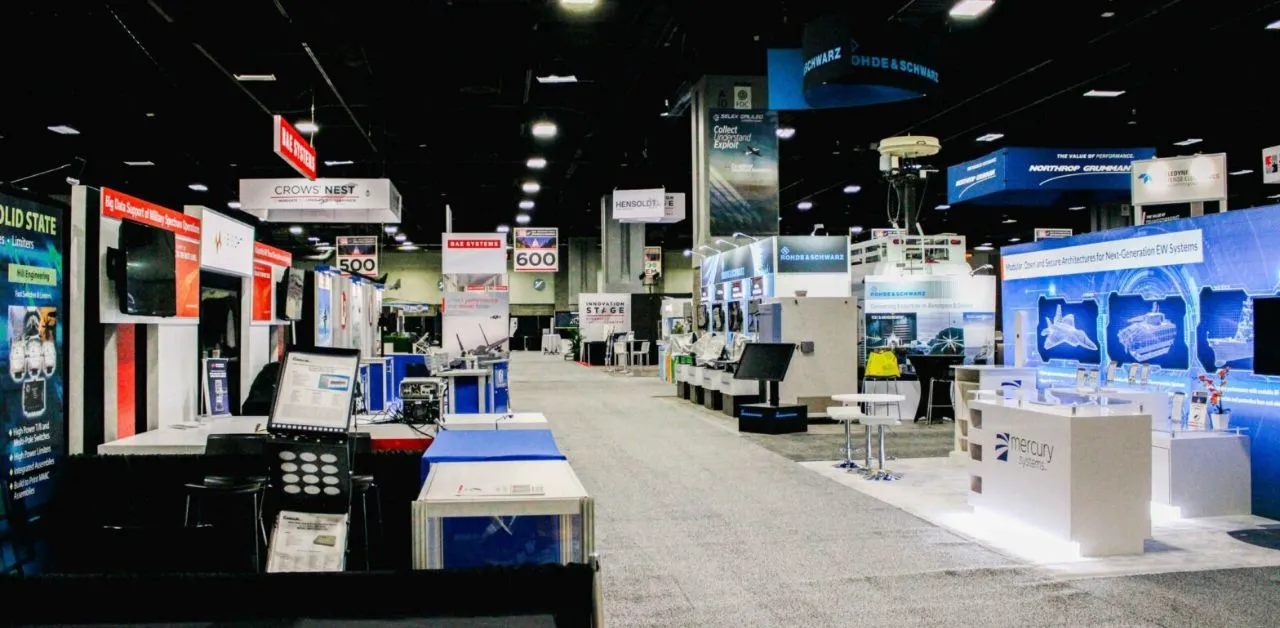
Quick Answer: Measuring trade show effectiveness requires tracking lead quality, booth performance, sales pipeline growth, and brand impact rather than just counting badge scans or foot traffic. Without clear KPIs defined before the event, businesses have no benchmark to evaluate whether their exhibition investment generated real ROI. Tools like CRM systems, badge scanners, marketing automation platforms, and event analytics software provide the data needed to make every future show smarter and more profitable.
The effectiveness of trade shows is the success rate of a business in its aim of attending an exhibition, expo, or industry show. Due to the aim, be it to lead generation, brand awareness, launching of a product, networking, or direct sales, all companies invest a lot of time and budget in trade show marketing, making it necessary to measure performance.
A carefully planned how to measure trade show effectiveness is not limited by booth design and foot traffic. It includes audience targeting, engagement strategies, conversion monitoring, and a follow-up on the post-event. In the absence of clear performance indicators, it is not easy to see the actual state of the investment (ROI) or where there are areas of improvement.
In the current competitive event business scenario, firms have to consider trade shows as an objective marketing campaign. Relying on the insights provided by the data, the attendance rates, the number of leads, and the effect on the revenue, businesses will be in a position to optimize their future exhibitions and ensure the success of the whole event.
Table of Contents
Why Measuring Trade Show Effectiveness Matters
The performance of a trade show is important; the exhibition is a huge investment that will need a lot of spending on the booth, transportation, staff, traveling, sponsorship, and advertising. Without effective performance tracking, businesses have no means to measure their activities in terms of return on investment (ROI) and have no reason to justify their expenditure on event marketing.
Following the performance of the trade show enables the firms to know whether or not their objectives, be it qualified leads generation, brand awareness, product awareness, alliance building, or on-site sales, are being achieved. It also shows what strategies proved to bring massive outcomes and what aspects require a change.
Besides the financial returns, measurement provides valuable data on the involvement of attendants, the precision of audience targeting, the sales funnel, and the efficiency of the post-event follow-up. By using this data-driven strategy, companies will be able to learn more about their exhibition plan, automate their booth activity, and improve the outcomes of their future event organizing.
Finally, quantification of the success of the trade show may be used to make exhibitions more of a continuous growth process instead of a one-off marketing process because the findings can be extrapolated to create a continuous growth channel, which can be translated into revenue generation and brand positioning over the long term.
Aslo Explore: The Guide to Trade Show Planning and Execution
Key Metrics to Measure Trade Show Effectiveness
The accurate measurement of the effectiveness of a trade show requires businesses to monitor performance indicators that determine the objectives of the exhibition for the business. These metrics are straightforward in terms of the purchase of leads, the extent of engagement, gross revenue, and the total ROI of the event. Through both quantitative and qualitative feedback, the companies are able to determine the performance of the trade shows more strategically and enhance the future event marketing performance.
Lead Generation & Quality
The generation of leads is usually the main goal of trade show participation, and the success is not measured by the quantity. The real metric is the quality of leads that have been registered and the potential to translate into customers. Monitoring the quantity of qualified leads, marketing- qualified leads (MQLs), sales-qualified leads (SQLs), and the general lead-conversion rates can be used to understand whether your booth was visited by the target audience.
Critical indicators are also cost per lead and post-event follow-up effectiveness. Quality leads and leads who proceed in the sales funnel easily prove that your trade show strategy, message, and targeting of your message and targeted audience were in line with your business goals.
Booth Performance Metrics
Success in the overall exhibition is directly related to booth performance. Traffic measurements of the booth floor, the level of attendee engagement, the length of stay on average, and the quality of interaction will shed some light on how well your stand drew and held people.
A properly constructed trade show booth, along with trained personnel and interactive quality, can contribute a lot to a better visitor experience. Performing engagement scores assists a business in optimising the booth design, staffing plans, product demonstrations, and on-site marketing plans to use in subsequent events.
Sales & Revenue Metrics
A trade show should translate into growth in revenue. The sales and revenue ratios relate the participation in an exhibition to measurable financial outcomes. On-site sales, pipeline value created, events-attributed revenue, and deal closing rates can be tracked to enable businesses evaluate the actual return on investment (ROI).
The evaluation of the customer acquisition cost (CAC) and revenue obtained due to the trade show also makes it possible to conclude whether the event was profitable. These financial performance ratios are justifiable for marketing expenditure and make up the decision to proceed with long-term event planning.
Brand & Market Impact
In addition to immediate sales results, a trade show has a great effect on brand recognition and market positioning. The measurement of brand recall, social media involvement, coverage on media, and partnership opportunities gives a wider view of the impact of events.
The insights of competitive benchmarking and audience perceptions also indicate your performance during the exhibition setting in terms of the brand. Bright visibility, positive feedback on attendance, and growth in industry recognition point to the idea that your trade show presence enhanced general brand authority and market reach.
Strategies to Improve Trade Show Effectiveness
To increase the efficiency of the trade show, it is necessary to provide a data-driven strategy in the Condition, during, and post of the trade show. Companies that manage exhibitions as a continuous marketing campaign, as opposed to episodic events, continue to record a better ROI, quality leads, and brand outreach. These are the strategies that can greatly improve the overall performance of the trade shows and the success of the event.
- Set Clear, Measurable Objectives: Identify objectives (e.g, qualified lead generation, product awareness, partnership development, or direct sales). Definite KPIs allow for matching the booth design, message, staffing, and promotion activities with quantifiable results.
- Target the Right Audience: Attending research, buyer profiles, and industry groups before the event. The email marketing process, use of social media campaigning, and scheduling of appointments can be done in advance to make sure that you are getting decision-makers to the event, but not random people.
- Optimize Booth Design and Experience: The strategically put up eye-catching booth would enhance visibility and interest. Live demonstrations, interactive displays, digital presentations, and experiential marketing also enhance well time and engagement levels of the attendees.
- Train Booth Staff for Engagement and Conversion: The team is an important element in the success of trade shows. The training should be done for staff on lead qualification, product knowledge, conversational selling, and CRM data capture to maximize the conversion potential.
- Leverage Pre-Event and Post-Event Marketing: Market your appearance before the event through specific campaigns and make pre-arrangements for meetings. Following the show, have a system of follow-up on leads and effectively take the prospects through the sales funnel.
- Use Technology for Lead Capture and Analytics: Track real-time engagement data with the help of lead retrieval tools, QR codes, badge scanners, and CRM integration tools. The data-driven insights increase the accuracy of reporting and planning future events.
- Analyze Performance and Optimize Continuously: Indicate ROI, lead conversion rates, pipeline contribution, and brand exposure through the use of a post-event analysis. This can be employed to make your trade show marketing campaign better in the next events by identifying the strengths and weaknesses.
Also Explore More: Trade Show General Services Contractor
Tools and Technologies for Measuring Trade Show Success
Trade show success is not a task that can be accurately assessed with the help of spreadsheets or hand-tracking. Event marketing in the modern world is based on the latest tools and technologies that allow obtaining real-time data, automating lead capture, and integrate performance of the exhibition with revenue metrics. Through the appropriate digital solutions, a business will be able to enhance the accuracy of reporting, improve the analysis of ROI, and enhance the overall trade show strategy.
CRM Systems for Lead Management
CRM systems like Salesforce and HubSpot have been used to assist business to capture, organizing, and following up on trade show leads effectively. The addition of data collected from the booth to a CRM is the right choice to enable enough segmentation of leads, scheduling of follow-ups, and monitoring the sales pipeline. This relationship simplifies the process of converting leads and deal progression as well as attributing revenue due to leads obtained during the exhibitions.
Lead Retrieval and Badge Scanning Tools
The badge scanners and lead retrieval systems make it easy to collect data in the field. These tools automatically collect the information of the attendants, minimizing the error in manual entry and enhancing the accuracy of the data. Live-time integration with CRM systems will enable the marketing and sales team to know the qualified leads in real-time and the level of engagement during the event.
Marketing Automation Platforms
Software such as Marketo and Mailchimp is an automated marketing tool that simplifies the process of following up with a post-event campaign. Personalized caring processes, automated email sequences, and engagement tracking are used to care for prospects through the sales funnel. The analytics also offered through these platforms include the open rates, the click-through rates, and the response behavior associated with the trade show leads.
Event Analytics and Performance Tracking Software
Cvent and Eventbrite are event management platforms that provide attendee insights, registration tracking, and engagement analytics. These tools assist in gauging the traffic patterns of booths, session attendance, and overall attendance of the events, and assist in the better comprehension of the performance of the exhibitions.
Social Media and Engagement Analytics
Social analytics, such as Hootsuite and Google Analytics, are used to check the brand’s visibility, engagement on the web, spikes in traffic on the site, and the performance of the campaigns during the time of the trade show. Mentions, referral traffic, and hashtags tracking help in determining brand impact and digital reach.
Data Dashboards and Reporting Tools
Tableau and Microsoft Power BI are business intelligence tools that enable the company to visualize trade show KPIs through interactive dashboards. These platforms will bring CRM data, marketing metrics, and revenue figures into one overall performance report and enable the ROI analysis to be clearer and actionable.
Common Mistakes When Measuring Trade Show Effectiveness
Trade show effectiveness is an important element that can be measured to understand ROI and make further improvements on other shows. Some businesses commit errors that damage the performance analysis and narrow the utility of the investment. These are the main mistakes that should be identified to make exhibitions more accurate and produce stronger results.
- Focusing Only on Lead Quantity: The number of leads that have been gathered should not be counted alone, as it may be misleading. Traffic does not translate to sales and interaction. Real ROI requires assessing the quality, purpose, and relevancy of the lead.
- Ignoring Clear Objectives and KPIs: It is hard to measure the success of an event without having a goal and key performance indicators. Measures such as conversion rate, cost per lead, or pipeline contribution are important. Specific goals will present a guideline for an effective assessment.
- Failing to Track Post-Event Conversions: After the event is over, many companies give up on tracking leads. Overlooking the follow-up performance, pipeline movement, and closures of deals limits the scope of comprehending the long-term value. The tracking process will enable the real effects of the trade show to be recorded.
- Not Integrating Data Across Teams: Data is fragmented and does not match when marketing and sales are in silos. The inability to use CRM and communication will decrease the accuracy of lead tracking. Unified systems guarantee the right integration of data and decisive insights.
- Overlooking Brand and Engagement Metrics: By focusing on sales only in the short term, one ignores the valuable brand-building results. The attendance, the use of social media, and media coverage are also important. The incorporation of these metrics is useful to evaluate the general market impact.
- Delayed or Incomplete Reporting: Delay in result analysis may cause insights to be missed. Post-event evaluation enables the teams to evaluate their engagement, the performance of the booth, and their efficiency in following up. Reporting on time is useful in making things better in the future.
Conclusion
How to measure trade show effectiveness is not determined by the look of the booth or the number of foot traffic, but rather goal-setting, performance metrics using data, and business results that can be measured. Since qualified lead generation and booth engagement are the case, revenue attribution and brand impact shall be the case as well; each aspect of an exhibition should enter a well-organized ROI evaluation framework.
With monitoring of the correct key metrics, strategic betterment tactics, the use of the latest technologies in events, and preventing the typical errors in measurement, companies can make the trade show a strong platform for growth. An optimized trade show plan reinforces the sales pipeline formation, better conversion, brand awareness, and long-term market positioning.
Finally, when companies think in terms of performance, they have an edge over those that do not. Once the success of trade shows is calculated properly and optimized over time, it turns out to be more than an investment in marketing; it can be scaled and profit-generating.
FAQs
Q. Why is lead quality a more important metric than lead volume at trade shows?
High badge scan counts mean nothing if the contacts aren’t relevant to your target buyer profile or have no purchasing authority. Tracking marketing-qualified leads, sales-qualified leads, and conversion rates reveals whether your booth attracted the right audience rather than just generating numbers that look good on paper.
Q. What’s the difference between measuring on-site sales versus pipeline value from a trade show?
On-site sales capture immediate transactions, while pipeline value tracks deals that originated at the show but close weeks or months later through follow-up. Measuring only on-site sales consistently underestimates true trade show ROI since many B2B deals require multiple touchpoints before closing.
Q. How do badge scanners and lead retrieval tools improve measurement accuracy?
These tools automatically collect attendee information in real time, eliminating manual entry errors and ensuring every qualified interaction is logged before the conversation ends. When integrated directly with CRM systems, they allow marketing and sales teams to act on lead data the same day rather than deciphering handwritten notes afterward.
Q. How quickly should post-event performance reporting be completed to be useful?
Delayed reporting allows insights to fade and makes it harder to identify exactly what drove or hurt performance while details are still fresh. Running a structured debrief within the first week after an event ensures findings directly inform preparation for the next show rather than being filed away and forgotten.
Q. What’s the most common reason businesses can’t justify their trade show budget to leadership?
The absence of pre-defined KPIs means there’s nothing concrete to report against when the event is over; investing looks like a cost rather than a revenue-generating strategy. Defining metrics like cost per lead, pipeline contribution, and conversion rate before the show gives leadership a clear framework for evaluating whether the investment delivered.