

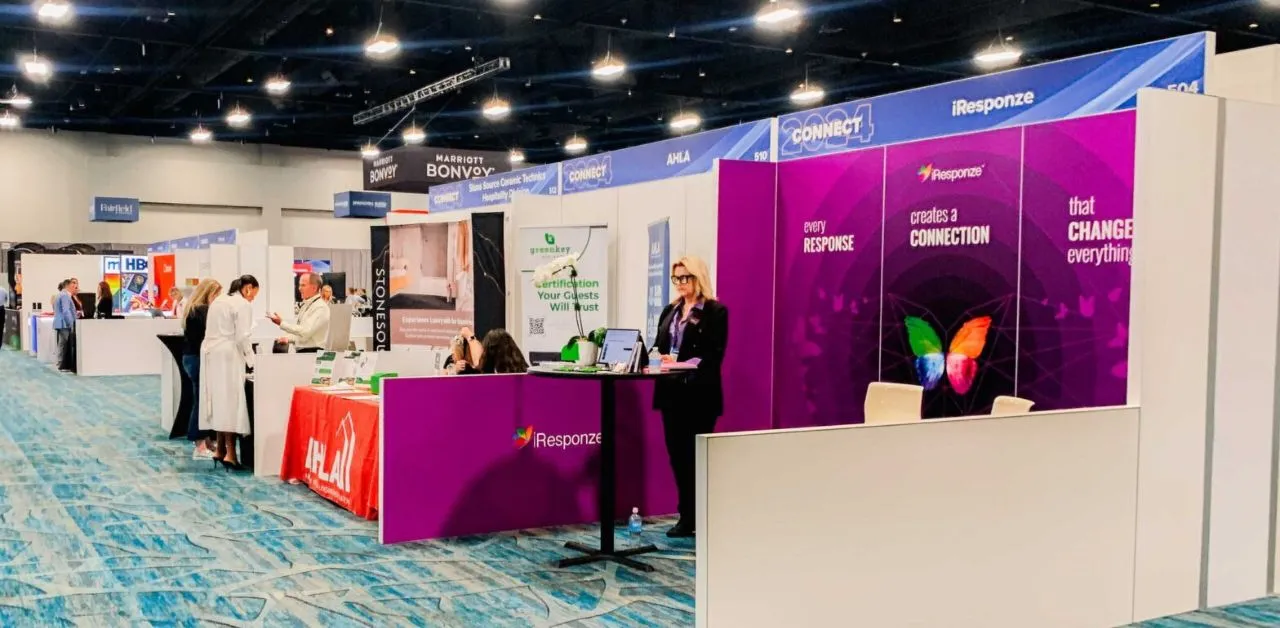
Quick Answer: Trade show goals and objectives are clear targets businesses set before exhibiting, such as lead generation, brand awareness, product launches, or partnership building. Companies with measurable goals are over 60% more likely to achieve high ROI compared to those without defined targets. Goals work best when anchored to a broader business strategy rather than set in isolation around booth traffic or badge scans.
The trade show is one of the best means by which businesses can meet with customers, showcase products, and enhance their penetration in the industry. Nevertheless, failure by most companies to do so is manifested by failure to define the trade show goals and objectives despite attending events. A professionally created booth will not bring any leads, brand awareness, or other tangible results unless it is created. Preparing your goals and objectives before the trade show will ensure that booth design and immersion of the staff will be planned and will not interfere with your overall trade show marketing plan.
The priorities of the various businesses differ, with some of them being concerned with matters related to creating leads, others related to the way products are introduced, partnerships, or making a better impression in the market. Once the objectives and goals are set and the goals are aligned to a good exhibition marketing strategy, firms can achieve the maximum returns on their investments and maximise their attendance in the trade show. The professional trade show management services, such as the ones within the scope of Audie Expo, help businesses plan, implement, and measure the results and turn every exhibition into a strategic growth opportunity.
Table of Contents
What Are Trade Show Goals and Objectives, and Why Do They Matter?
Trade show goals and objectives are the clear targets a business sets before attending an exhibition or industry event. Their statements are in terms of what a company wants to do, whether it is to develop leads, create awareness, come in with a new product, or form partnerships in the industry. The lack of these goals will imply that the companies will attend the trade show without a goal, will fail to meet the right people, and will be unable to evaluate their success.
Targets also help to guide the trade show marketing plan and ensure that every activity, like the design of the booth and contact with the staff members, can deliver considerable outcomes. These are the objectives because trade shows represent a huge investment in terms of time and money. Recent research has also revealed that a business that formulates quantifiable goals in its exhibition marketing stands a better chance over 60 percent in achieving a high ROI. Clear objectives will enable tracking the success of event marketing, maximize the lead monitoring process, and become more visible in competitive markets.
As soon as the companies have been informed about what they have to gain at the trade show, they can make sure that they allocate resources effectively, make decisions based on facts, and provide the attendees with an all-encompassing experience that the attendees may identify with, thus transforming casual visitors into future customers or permanent partners.
Also Know About: Difference Between Customer Service and Hospitality Explained
Top Trade Show Goals and Objectives Every Exhibitor Should Set
It all starts with trade show goals and objectives to help be successful in the exhibition. Companies need to understand what they will achieve, and then they will plan a booth or appear at an event. It is possible to suggest the right goals that can facilitate the modification of the personnel, marketing tools, and engagement strategies so that all the interactions within the trade show can yield quantifiable results. Companies are at times multitasking-oriented, such as in the creation of leads, strengthening brand awareness, product promotion, or the formation of partnerships within the industry.
Lead Generation and Customer Acquisition
One of the most utilized and vital trade show objectives is lead generation. Exhibitions present a highly narrowed market segmentation, thus a business has the chance of developing qualified leads and converting the lead into a potential customer. By integrating an effective event marketing strategy with calls to action, the interactive booths and effective event marketing would help to capture more leads and offer more opportunities to make a sale. Follow-up is also timely and well organized because of the tracking of leads during and after the trade show, thereby enhancing the conversion rates.
Brand Awareness and Market Visibility
The other objective is to strengthen brand awareness and market presence. The trade show allows the business to tap new audiences, as well as to avoid competition. It can be impressed with striking booth designs, engagement, and through the internet. Companies that plan the goals of the exhibition marketing using visibility are more likely to have better involvement, and the rate of long-term awareness is more profound.
Product Launch and Demonstrations
A trade show is the most appropriate method of introducing new products. Live demonstrations will enable the potential customers to touch the product, ask questions, and know about its value. This supports the event marketing plans by developing attention and interest. The proper trade show goals and objectives can be matched with product demos to make every visitor contact a prospective sale or lead.
Building Partnerships and Industry Networking
The other important objectives include networking and forming alliances. Exhibitors can also make partnerships between themselves and suppliers, distributors, and complementary brands. Strategic networking assists in long-term growth and gaining strength in the industry. These objectives are combined as an element of a trade show marketing strategy to ensure that no discussions are pointless.
These are goals that can be set, and it is through this that a business can give what is most valued, and this includes the provision of leads, brand recognition, product launch, and worthwhile relationships. With clear goals, the involvement will turn the success into measurable success. Planning also allows teams to get the best out of a resource that they have at their disposal, to the right people, and a high return on investment. All the events held at a trade show will, provided, eventually lead to your major goals, and the event will seem like a stepping-stone.
Also Explore: How to Prepare for a Trade Show Success from Start to Finish
Common Mistakes Companies Make When Setting Goals
However, the majority of businesses do not achieve their trade show goals and objectives owing to overall planning mistakes. Lack of particular strategies can make companies spend resources in vain, miss opportunities, and fail to estimate the ROI of the trade shows. Knowledge of these pitfalls is also valuable in helping businesses to be smarter on how to organize a certain exhibition and to capitalize on the same.
- Lack of clear objectives: The majority of the exhibitors fail to have clear objectives for visiting the trade show. This lack of concentration makes it quite difficult to organize staff effort, properly design the booth, and keep track of the performance of event marketing and, consequently, fosters poor returns.
- Focus on Sales: Sales are important; however, a company may focus on sales and forget about other needs, such as brand recognition, networking, and product demonstrations. The balanced exhibition marketing strategy will be employed to ensure that all the critical goals are achieved.
- Failure to follow up on Leads: Leads are half the battle. Companies tend to fail to plan follow-ups beforehand, and this reduces the conversion rate. The leads will turn out to be the real customers by integrating trade show marketing objectives and the post-event tactics.
- Poor Appeal Booth Design and Interaction: A poor and unattractive booth can be repelling. It is possible that without considering the plans to draw the booth and make it an interactive one, the best goals cannot be reached.
- Failure to Focus on Metrics and Measurement: It is challenging to measure success when you are not measuring such variables as visitor interest, qualified leads, or social media reach. The business can determine its outcome in terms of its trade show goals and objectives by measuring its performance using event marketing KPIs.
Excluding such mistakes in the picture, it implies that any exhibition will be a true source of better. With proper planning, strategy engagement, and follow-ups, trade shows become a marketing platform. Precise coordination of actions to quantifiable objectives assists businesses to optimize their ROI, create a formidable brand image, and achieve success in the long-term success of any incident.
Also Explore: What to Bring to a Trade Show – Essential Checklist
Strategies to Achieve Your Trade Show Goals and Objectives
You need to organize, be innovative, and goal-oriented towards meeting your trade show goals and objectives. It is not a perfect example of attending an exhibition and being active, but actively visiting the exhibition where businesses are obliged to monitor the outcomes and have the plans to support their trade show marketing strategy with the help of strategies. The proven strategies and approaches will allow companies to make every trade show a growth and visibility opportunity with high ROI.
- SMART Objectives: Formulate SMART specific, measurable, achievable, relevant, and time-bound objectives. Goals would be what would help steer all your exhibition marketing strategies, such as how to design your booth to spearhead follow-up, since the staff would be working towards the optimal results.
- Design an Interactive Booth: Your booth has to be conspicuous and interactive. Introduction of interaction tactics in the booth, such as live demonstration, interactive displays, and digital touchpoints, helps to make the visit more interesting and facilitate the delivery of your objectives in the trade show.
- Train Personnel to Visitor Interaction: Have your people learned to be friendly, and work towards accomplishing your trade show goals. Through appropriate training, they will be in a position to act as the representative of your brand message, create leads, and translate the talk into viable business opportunities.
- Use Pre-Show Marketing: Market by use of email marketing, social media, and invitations. The event marketing objectives you have as a pre-show strategy will help you to get qualified traffic to your booth, which will maximize the leads you will receive and the brand name you will be known for.
- Measure and Follow-Up: Evaluate the performance according to the event marketing KPIs, such as traffic at the booth, qualified leads, and social activity. The follow-ups following the follow-ups of the prospects ensure that leads that you collected during the trade show are converted to the reality of the business, and the loop of your trade show marketing plan is closed.
By using these strategies, the companies can transform prudent planning into a measurable success. Let all your activities, including pre-show marketing, post-event follow-up, and all others, be aligned with your core objectives. These are the strategies that can improve the interest of the visitors, create a brand image, and give a good ROI of any exhibition, if they are aligned with the appropriate trade show goals and objectives.
Also Explore: How to Estimate Crowd Size Perfectly for Events & Exhibitions
How to Align Trade Show Goals with Business Strategy
Most companies set trade show goals in isolation, a lead number here, a booth traffic target there, without connecting them to what the business is actually trying to achieve. That disconnect is why trade show results often look acceptable on paper but fail to move anything that matters. Trade show goals and objectives only become valuable when built backwards from business strategy, not forwards from what’s easy to measure on a show floor.
- Start with the business objective: Before setting a single trade show objective, the right question is what the business needs most right now: new market entry, pipeline acceleration, brand repositioning, or customer retention. The process of arranging trade shows and meetings that meet determined goals and purposes only works when that purpose is defined before the floor plan, staffing model, or KPIs are set. Companies that skip this step end up optimizing for metrics badge scans, booth traffic counts that don’t connect to the strategic outcome the show was supposed to deliver.
- Translate strategy into measurable floor objectives: Setting goals for retail trade show participation requires moving from abstract strategy to concrete behavior: if the goal is pipeline, what’s the minimum qualified conversation count per day? How to define goals for an experiential exhibit beyond leads forces articulation of non-lead outcomes, partnerships initiated, analyst relationships built, perception shifts measured that are just as strategically meaningful but rarely tracked. Every staff member at the booth should be able to answer in one sentence what a successful show looks like.
- Select shows based on fit, not habit: How to select trade shows that align with business goals is a question most companies treat as obvious. We attend the same shows every year until they pressure-test each event against current priorities. A show right for a market-entry objective two years ago may be wrong for a retention-focused objective today. Trade show growth comes from auditing the annual calendar against the current go-to-market strategy and making deliberate choices about which events to invest in, reduce, or skip.
- Build the booth around the goal: Agencies that align trade show exhibits with sales and marketing goals begin with the conversion objective, work backwards to the visitor experience required, then determine what the space and staff need to deliver. High-end custom exhibits failing to achieve marketing goals is almost always a strategy problem, not a design problem. The booth looked impressive, but was built around the wrong objective. If your exhibit partner isn’t asking about business goals in the first conversation, they’re building the wrong booth.
- Measure outcomes, not just activity: Max trade show ROI isn’t achieved by collecting more badge scans; it’s achieved by defining upfront what a qualified outcome looks like. Who can handle complex, high-visibility trade show programs that report meaningful ROI, build measurement frameworks before the show: pre-show baselines, on-floor tracking tied to specific conversation types, and post-show attribution connecting activity to pipeline or revenue. Trade show success strategies that consistently deliver treat measurement as a strategic discipline, not a post-event obligation.
When trade show goals are anchored to business strategy, the entire program changes, which shows you attend, how you build the space, who you send, and how you measure results. The companies that consistently get more from their trade show business plan aren’t spending more; they’re aligning more deliberately, and that alignment starts before the booth deposit is paid.
Key Metrics to Measure Your Trade Show Goals and Objectives
This is why it is relevant to evaluate the performance of your trade show goals and objectives to understand the impact of your work. Lack of results tracking will result in businesses failing to establish whether their goals in terms of exhibition marketing were achieved or not, and whether there is a need for improvement. The overall number of qualified leads, the amount of traffic at the booth, and the overall interaction with the visitors are the most significant measures. Monitoring these indicators, the businesses can evaluate the rates according to which their trade show marketing strategy transforms attendees into prospects and can be used to develop in the long run.
Other important measures include sales opportunities generated, social media and brand media, and efficiency in event follow-up. Using these KPIs of event marketing, businesses are able to calculate the ROI of trade shows and, thereafter, make effective decisions on subsequent events. By monitoring the achievements against the established objectives periodically, the companies will be capable of refining their approach, calculating the resources efficiently, and ensuring that every one of the trade shows will bring value to the comprehensive exhibition marketing strategy.
How Audie Expo Helps Businesses Achieve Their Trade Show Goals and Objectives
Audie Expo is a management company of trade show services that undertakes end-to-end trade show management for businesses to ascertain the goals and objectives of trade shows. We will also take care of all the chores of your exhibition, such as strategic event planning. booth layout, etc., so that there will be no discrepancies in the marketing strategy of your trade show. The logistics, visitor management, and lead capture process assist companies in focusing on the right people and creating awareness of the brand and qualified leads.
Our group also assists companies in tracking the event marketing KPIs, the trade show ROI, and modifying the follow-ups by the event to transform the leads into actual sales. Exhibition marketing services offered by Audie Expo enable companies to create an unforgettable experience in a booth, product introduction, and build meaningful relations with the industry. By integrating these services into a planned exhibition marketing program, we help companies to make each trade exposition a measurable growth opportunity.
Get in touch with our experts today! Whether you’re planning a trade show, exhibition, or corporate event, our team is ready to assist you. Visit our Contact Us page to connect.
Conclusion
The definition of clear trade show goals and objectives forms the basis of any successful exhibition. Without strategic planning, the companies may find themselves in situations that leave them directionless and without leads, exposure to the brand, and other beneficial networking opportunities. Through the aid of setting realistic goals, keeping track of the main indicators, and providing the means of efficient interaction, companies will be capable of maximizing the ROI of trade shows and making every such event a successful growth opportunity. Through professional trade show management companies like Audie Expo, every goal of yours will be aligned with your objective, including your booth design, capture of leads, and making post-show follow-up. With the appropriate trade show goals and objectives, which are supported by professional event planning, any particular exhibition will become a place of increased brand awareness, effective product launches, and long-term relationships with the industry. A trade show is not merely an event, but a calculated step towards business growth since it consists of planning and paying attention to measurable outcomes.
FAQs
Q. Why do businesses with measurable trade show goals see better ROI than those without?
Clear, quantifiable objectives guide booth design, staffing decisions, and follow-up strategy, ensuring every activity ties back to a specific outcome. Without this focus, companies often attend trade shows without direction, missing the right contacts and failing to evaluate success afterward.
Q. Should every trade show goal be focused on lead generation?
No, overemphasizing sales while ignoring brand awareness, networking, or product demonstrations creates an unbalanced strategy. A well-rounded approach incorporates multiple objectives so the event delivers value beyond just immediate lead counts.
Q. How do I know if a trade show I’ve attended for years is still the right fit?
Audit each event annually against your current go-to-market strategy rather than attending out of habit. A show that aligned with a market-entry objective two years ago may no longer fit if your current priority is customer retention.
Q. What does a “SMART” trade show objective actually look like in practice?
A SMART objective is specific, measurable, achievable, relevant, and time-bound, for example, generating 50 qualified leads within a three-day show rather than a vague goal like “get more visibility.” This specificity guides booth design and staff training toward a concrete outcome.
Q. Why do some impressive, expensive booths fail to achieve their marketing goals?
This is typically a strategy problem, not a design problem. A booth built without first defining the conversion objective often looks polished but doesn’t deliver results because it wasn’t designed around what the business actually needed to achieve.