

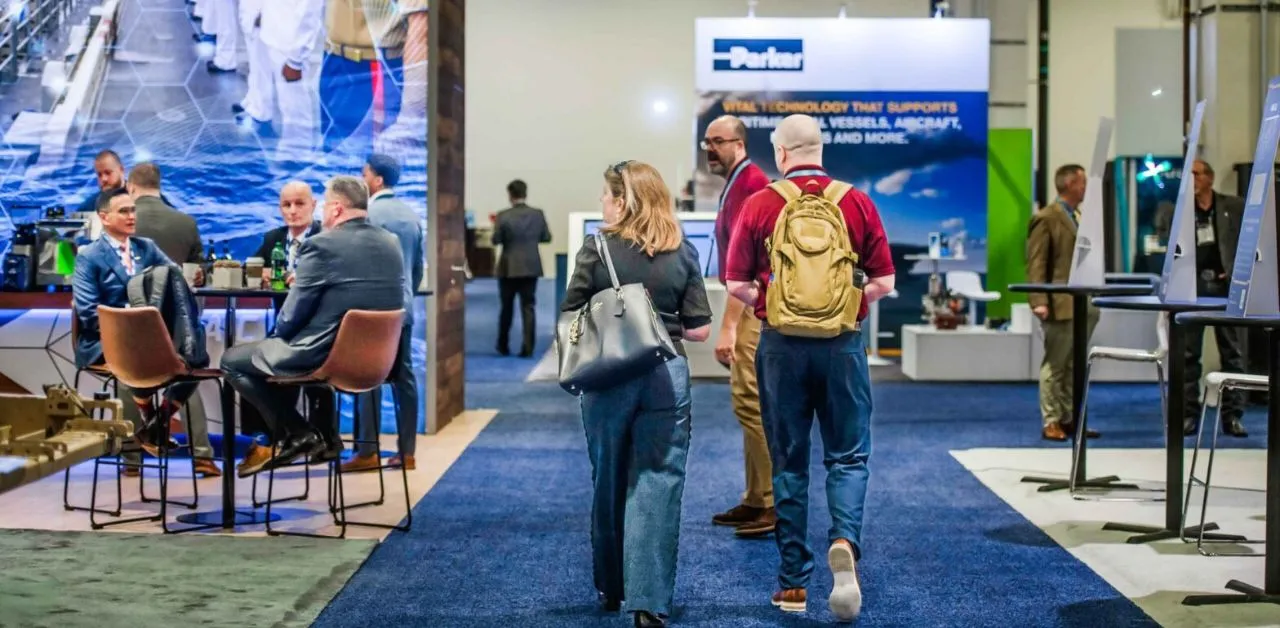
Quick Answer: Estimating crowd size accurately requires understanding crowd density (people per square meter), calculating usable floor space, and applying the right formula for your event type. Trade shows typically need 2.5–3 sqm per person, with 40–50% of total floor space consumed by non-exhibitor areas. Combining manual methods with technology like RFID, QR check-ins, and aerial estimation improves accuracy by over 30%.
When you happen to plan a trade show or an exhibition, everything might appear easy on the face of it. You reserve a venue, bring in exhibitors, advertise the event, and hope that people will turn up. However, behind all the successful events, there is one very important question: How to Estimate Crowd Size attending. It is not merely a matter of counting people. It is concerned with safety, planning, and ensuring that your event is a success that is stress-free and risk-free.
A lot of event planners do not give much consideration to the fact that a good estimation of the crowd size is very crucial. They just consider registration numbers and make presumptions that the number will be reflected in real attendance. But it is not how actual events do. There are registered guests who do not turn up, and the number of walk-in visitors might be very high; they might not make prior arrangements. That is why it is so essential to estimate the attendance of the exhibition and plan the event capacity correctly. Miscalculation can lead to overcrowding, a lack of control over the crowd, or even breaking the regulations of event safety.
The knowledge of estimating the size of the crowd can assist in budgeting and logistics as well. With an approximate number of people that one can expect per square meter, it is possible to budget on seating, security personnel, food stands, entry and exit traffic, and emergency exit routes. Any minor error in calculating crowd density can cause major hitches in the peak hours of a trade show, particularly in large ones. The research on the global event industry demonstrates that the mismanagement of crowds is one of the leading causes of failure in organizational operations in major exhibitions.
Crowd estimation is not an estimation in the case of professional event companies such as Audie Expo. It is a methodical procedure that encompasses the calculation of event space, occupancy limits, and the strategic management of crowds in the trade show. The reason is that when you organize exhibitions as a professional, it is not about filling the venue that you are preoccupied with, but the production of a safe, organized, and successful event experience throughout the entire process.
Table of Contents
Why Is Crowd Counting So Challenging?
However, it might seem simple to count people in the beginning. You might believe that you can just see what the venue size is, what is registered, and be given a number. However, in practice, the knowledge of how to estimate the number of people in a crowd is far more complicated. People are never standing in one place that makes counting the crowd challenging. They come, go, and meet in formations as well as disperse at various times of the day. Such mobility poses a real challenge in ensuring proper management of crowds at different events, particularly during trade show services.
Changing attendance is one of the greatest challenges. In a trade show, the number of people passing in and out varies on an hourly basis. The morning hours can be relaxed, but the high levels of crowd density can be produced unexpectedly inthe evening hours unexpectedly. This complicates the process of determining the number of people per square meter at any one time. When organizers sum up the number of people registered and do not pay attention to the pressure on the crowd during peak time, they risk congesting some areas, such as entrances, seminar halls, or food courts. This is why the event capacity planning has to take into account the overall attendance and the density at the peak.
Also Explore: How to Measure Trade Show Effectiveness the Right Way
Which Crowd Estimates Should You Believe?
Estimating crowd sizes can be tricky in crowds because various sources may provide vastly varied estimates. The source of the estimation is really important: official estimates by the police or municipal governments, which are made on the basis of measurements and aerial shots, tend to be more accurate, but still may be biased. Especially the organizers of the events can overstate numbers in order to appear popular.
The approach is also a matter of concern. Systematic methods such as the Jacobs Method, aerial photographs, or satellite images are usually more precise than mere estimates. Subjective techniques such as enumerating entrances may be very different.
The range may be identified more accurately through cross-checking local news, social media, and independent observers. The most reasonable course of action is to have a variety of sources and approaches instead of focusing on one dramatic character.
How to Estimate Venue Capacity & Space Requirements for Events
Whether you’re planning a trade show, expo, or large-scale event, knowing how to estimate venue capacity is one of the most critical steps in your planning process. Understanding crowd density, space per person, and event space requirements upfront saves you from costly last-minute decisions and keeps your event safe, compliant, and professionally executed.
Step-by-Step Techniques to Estimate Crowd Size:
- Understand Crowd Density Basics: Before calculating anything, understand crowd density, people per square meter, the foundation of all capacity planning. Comfortable standing density sits around 1 person per 0.5–1 sqm, while shoulder-to-shoulder reaches 4 people per square meter at maximum. These benchmarks help you set realistic attendance targets and stay within safety guidance from day one.
- Calculate Your Usable Floor Space: Not every square meter is usable; subtract walkways, registration, exits, and staging before calculating capacity. For trade shows, 40–50% of total floor space is typically consumed by non-exhibitor use. Always work from your net usable area to avoid overcrowding and safety violations.
- Apply the Right Density Formula for Your Event Type: Typical crowd density, persons per square meter, varies significantly between a festival, conference, and trade show floor. For trade shows, plan 2.5–3 sqm per person; for standing events, 0.5–1 sqm is the safe standard. The wrong formula leads directly to bottlenecks, safety issues, and poor attendee experience.
- Factor in Crowd Flow and Movement: Static numbers don’t account for how people actually move through a space. Registration desks, food stations, and keynote areas all create natural bottlenecks that affect how to estimate attendance at an event accurately. Safety guidance recommends a minimum 3-meter aisle width for large trade shows to keep flow comfortable and compliant.
- Validate With Headcount and Aerial Estimation: Once live, use real data to validate your pre-event estimates. The grid method, dividing space into sections and counting density, is one of the most reliable ways of estimating crowd size on the floor. Combined with badge scans and entry counters, this data becomes your benchmark for planning every future event smarter.
Estimating venue capacity isn’t guesswork; it’s a discipline that sits at the intersection of safety, logistics, and attendee experience. When you understand crowd density per square meter, apply the right formula, and plan for real movement patterns, you eliminate the surprises that derail even well-funded events. The planners who get this right don’t just fill rooms; they create environments where every square meter works harder for the success of the event.
Also Explore: How to Attract People to Your Exhibition Stand Fast
Tools and Technology That Help Estimate Crowd Size
Nowadays, with the help of modern devices, it is a lot easier to comprehend the way to estimate the size of a crowd. People in exhibitions and trade shows do not stay in one place, and manual counts cannot be trusted.
The check-in and scan by QR allow real-time attendance monitoring, whereas the RFID badge monitors the movement through the various zones. This aids in the control of the level of the crowd density and safe event space calculation.
Autonomous drones and aerial photography with AI can estimate crowds in a short amount of time, whereas heat mapping and smart dashboards indicate overcrowded areas. The event management software brings together all the information, which assists organizers in planning the staff and booths, as well as emergency planning.
Research indicates that the use of these technologies enhance accuracy of attendance by more than 30 percent and minimizes safety risks. Using these tools, professionals such as Audie Expo can estimate the attendance of the exhibition and ensure that the trade show is running smoothly and safely.
Also Explore: How to Find Trade Show Models: A Complete Hiring Guide
Crowd Density Formula: A Quick Reference Chart
Estimating crowd size gets much easier once you understand crowd density, the number of people occupying a given space. The basic formula is simple: Crowd Size = Event Area (in square meters) × Crowd Density (people per square meter). Once you know how tightly packed a space is, this quick reference chart makes it easy to convert that density into an actual headcount.
Loose / Comfortable (1 person/m²)
- Approx. 10.8 sq. ft. per person
- Allows free movement with relaxed spacing.
- Common on open exhibition floors.
Moderate (2 people/m²)
- Approx. 5.4 sq. ft. per person
- Some physical contact with a steady flow of people.
- Typical in busy trade show aisles.
Dense (3–4 people/m²)
- Approx. 2.7–3.6 sq. ft. per person
- Noticeable body contact with limited movement.
- Common during festivals or peak event hours.
Tight / Shoulder-to-Shoulder (5 people/m²)
- Approx. 2 sq. ft. per person
- Very limited movement due to high crowd density.
- Often seen in packed standing areas.
Maximum Safety Limit (6+ people/m²)
- Less than 2 sq. ft. per person
- Considered a high-risk crowd density.
- Most event safety guidelines classify this as an unsafe condition.
Why Brands Trust Audie Expo to Accurately Estimate Crowd Size
Regarding exhibitions and trade shows, brands require not only numbers but also precision, security, and efficiency in conducting the event. That is why businesses rely on Audie Expo to cope with the issue of calculating the crowd size on a professional level. Having an end-to-end experience in trade show management, Audie Expo uses the traditional approach and the latest technology to provide an accurate estimation of attendance at an exhibition.
Audie Expo begins by determining the available floor space, implementing the right formula for the crowd density and peak-hour flow. Next, there are digital solutions such as QR check-ins, RFID badges, and live dashboards that monitor attendance during the event. This will make sure that each area remains at a safe depth of the crowd, as well as assist the organizers in maximizing the booth placement, the width of aisles, and the movement of the visitors.
Another advantage that brands find in Audie Expo is that it does not use guesses and registrations only. Their organised way of thinking includes walk-in customers, more than one entrance door, and variations of the crowd at the busiest time. Not only does this make events safe, but it also enhances marketing knowledge and exhibitor ROI. Expert planning, recent technology, and ground coordination allow Audie Expo to ensure that crowd estimates are precise, trustworthy, and practical, and therefore a reliable partner in terms of massive trade shows and exhibitions.
Get in touch with our experts today! Whether you’re planning a trade show, exhibition, or corporate event, our team is ready to assist you. Visit our Contact Us page to connect.
Conclusion of How to Estimate Crowd Size
To have a successful exhibition or trade show, it is important to know the correct method of How to Estimate Crowd Size who will attend. Having a proper crowd estimation influences all aspects of event planning, such as safety and compliance, staffing, and visitor experience. Although conventional approaches, such as registration counts, give a base point, they can only be used to address overcrowding, logistical problems, or lack of satisfaction among attendees.
New technologies like online checking in, RFID-tracking, drones, and AI-based analytics can help make crowd estimation more accurate, and adequate calculation of the event space and formulae of the crowd density can be used to guarantee that there are no issues with overcrowding during the peak hours. With these techniques coupled with seasoned planning, brands will be in a position to host massive events without any surprises.
Exhibition management Companies such as professional event companies, such as Audie Expo, offer end-to-end trade show management, with traditional and innovative technology to offer precise estimates of exhibition attendance. This will guarantee an easy running of the business, security, andan enhanced experience by the attendees and the exhibitors. These techniques can contribute to the success of any trade show once the organizer understands them and applies them when managing a crowd, optimizing event space, and managing the crowds.
FAQs
Q1. How much usable floor space should I actually plan for at a trade show?
Roughly 40–50% of total floor space is typically consumed by walkways, registration, exits, and staging, not exhibitor use. Always calculate capacity from your net usable area rather than total square footage to avoid safety violations.
Q2. What’s considered a safe crowd density for a trade show floor?
For trade shows, plan around 2.5 to 3 sqm per person, compared to 0.5 to 1 sqm for standing events. Shoulder-to-shoulder density reaches up to 4 people per square meter at maximum, which should be avoided for safety and comfort.
Q3. What role does technology play in improving crowd size accuracy?
Tools like QR check-ins, RFID badge tracking, drones, and AI-based heat mapping allow real-time monitoring of attendance and density across different zones. Research shows these technologies can improve attendance accuracy by more than 30% compared to manual counting alone.
Q4. What is the grid method used in crowd estimation, and why does it matter?
The grid method divides a space into sections and counts density within each one, making it one of the most reliable ways to validate live crowd estimates. Combined with badge scans and entry counters, it creates a benchmark for smarter planning at future events.